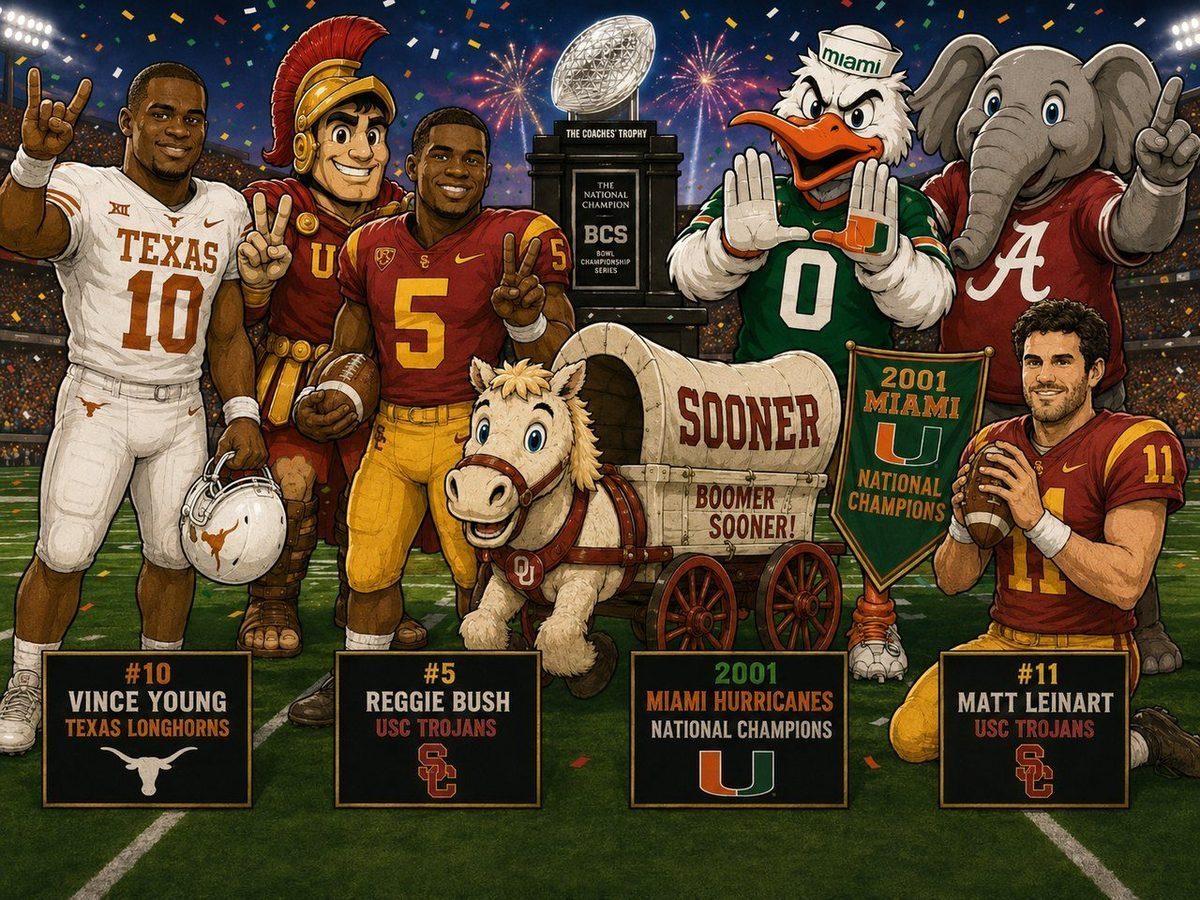
College football has never had a clean way to crown its best — no playoff, not in this era, just a final poll and an argument that never ends. So I settled it on my own terms, with the scoreboard as my witness: how badly a team beat people, how good those people actually were, and how many of them went on to get paid on Sundays.
Average margin of victory. Strength of schedule, measured by what every opponent did all year. Wins over teams that finished ranked. And the NFL bloodlines a roster left behind. Five teams cleared the bar. Here they are, counted down by how thoroughly each one bent a season to its will.
#5 2000 Oklahoma Sooners (13-0)
- Average margin of victory: 22.1 PPG
- Division I-A opponents’ record: 87-70 (.554)
- Wins vs. Top 10 (final AP poll): 3 — #5 Florida State, #8 Nebraska, #9 Kansas State
- Wins vs. Top 25 (final AP poll): 4 — #5 Florida State, #8 Nebraska, #9 Kansas State, #12 Texas
- The cool stat: Oklahoma beat (then) #11 Texas, #2 Kansas State, and #1 Nebraska in the span of three weeks.
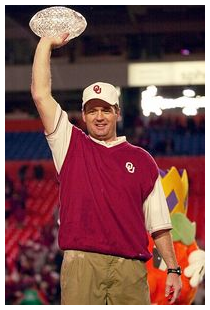
Bob Stoops was barely two years into the job when he dragged Oklahoma out of a decade in the wilderness and back to the top of the sport — and the way he did it still reads like fiction. Over three weeks in October, the Sooners knocked off No. 11 Texas 63-14, then No. 2 Kansas State, then No. 1 Nebraska, three of the best teams in the country without a breath in between.
There was no Heisman-stuffed roster here, no glamour — just Josh Heupel running the show and a defense that simply would not break, all the way through a grind-it-out Orange Bowl win over Florida State for the title. The 2000 Sooners are one of the most underrated, overlooked champions of the entire BCS era. Don’t make that mistake.
#4 2009 Alabama Crimson Tide (14-0)
- Average margin of victory: 20.4 PPG
- Division I-A opponents’ record: 101-67 (.601)
- Wins vs. Top 10 (final AP poll): 3 — #2 Texas, #3 Florida, #10 Virginia Tech
- Wins vs. Top 25 (final AP poll): 5 — #2 Texas, #3 Florida, #10 Virginia Tech, #17 LSU, #20 Ole Miss
- The cool stat: Alabama had to block two field goals against Tennessee just to stay undefeated.
The “what if” will trail this team forever: what if Colt McCoy hadn’t gone down with a shoulder injury in the opening minutes of the BCS title game? We will never know — and frankly, it doesn’t matter. You don’t dock a champion for the other team’s misfortune. This is football, and injuries are part of it.
What isn’t up for debate is how Alabama got there. Nick Saban’s first title in Tuscaloosa came the hard way — through the most powerful conference in the country, surviving one near-upset after another. Toughest road of anyone on this list, walked without a single stumble.
#3 2004 Southern California Trojans (13-0)
- Average margin of victory: 25.2 PPG
- Division I-A opponents’ record: 82-70 (.539)
- Wins vs. Top 10 (final AP poll): 3 — #3 Oklahoma, #9 California, #10 Virginia Tech
- Wins vs. Top 25 (final AP poll): 4 — #3 Oklahoma, #9 California, #10 Virginia Tech, #19 Arizona State
A team the record books would like you to forget, after the NCAA eventually came for the banner — but anyone who actually watched college football in 2004 knows better. Pete Carroll’s Trojans had a backfield straight out of a video game: a reigning Heisman winner in Matt Leinart, and the next season’s Heisman winner, Reggie Bush, lined up beside him.
They didn’t merely beat Oklahoma in the Orange Bowl to lock down a repeat as national champions; they dismantled the Sooners in one of the most lopsided title games anyone can remember. Vacated or not, that team was a juggernaut, and the people who appreciate elite football should never let it slip down the memory hole.
#2 2005 Texas Longhorns (13-0)
- Average margin of victory: 35.8 PPG
- Division I-A opponents’ record: 88-66 (.571)
- Wins vs. Top 10 (final AP poll): 2 — #2 Southern California, #4 Ohio State
- Wins vs. Top 25 (final AP poll): 4 — #2 Southern California, #4 Ohio State, #20 Texas Tech, #22 Oklahoma
- The cool stat: Texas posted seven 50-point games, four 60-point games, and one 70-point game.
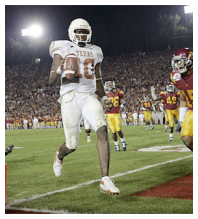
Mack Brown’s Longhorns didn’t win games so much as detonate them. Texas averaged better than 50 points a night for the season — a number that could have flirted with 60 had Brown not pulled his starters early in nine of thirteen games. The engine, of course, was Vince Young, who authored the single greatest performance the title game has ever seen.
It wasn’t just a one-year wonder, either. Thirty players off that roster went on to careers in the NFL. This was a championship team that looked every bit the part on every single Saturday it took the field.
#1 2001 Miami Hurricanes (12-0)
- Average margin of victory: 32.9 PPG
- Division I-A opponents’ record: 81-60 (.574)
- Wins vs. Top 10 (final AP poll): 1 — #8 Nebraska
- Wins vs. Top 25 (final AP poll): 6 — #8 Nebraska, #14 Syracuse, #15 Florida State, #18 Virginia Tech, #19 Washington, #21 Boston College
- The cool stat: Virginia Tech nearly spoiled the perfect season, falling short on a two-point conversion in the closing seconds of the regular-season finale.
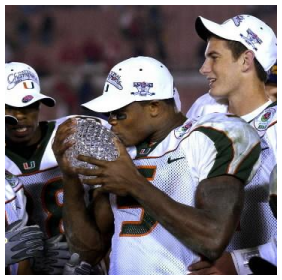
And then there is the team that ends the argument. If you were impressed by Texas sending 30 players to the NFL, you had better sit down for this one: the 2001 Hurricanes produced thirty-eight, with seventeen of them taken in the first round. Read those numbers again. This wasn’t a college football team so much as a professional pipeline that happened to play its home games in Coral Gables. Larry Coker inherited that roster in his first season as head coach and was wise enough to stay out of its way.
They came within one missed Virginia Tech two-point conversion of a flawless season, but Miami took care of business and throttled Nebraska in the Rose Bowl for the crown. Put plainly: the ‘01 ‘Canes were one of a tiny handful of college teams ever assembled that could have walked onto an NFL field and given a struggling pro roster a real game. The greatest champion of the BCS era — and it isn’t especially close.
The Five, By the Numbers
| Rank | Champion | Record | Avg. MOV | Wins vs. Top 10 | Wins vs. Top 25 |
|---|---|---|---|---|---|
| 1 | 2001 Miami Hurricanes | 12-0 | 32.9 | 1 | 6 |
| 2 | 2005 Texas Longhorns | 13-0 | 35.8 | 2 | 4 |
| 3 | 2004 USC Trojans | 13-0 | 25.2 | 3 | 4 |
| 4 | 2009 Alabama Crimson Tide | 14-0 | 20.4 | 3 | 5 |
| 5 | 2000 Oklahoma Sooners | 13-0 | 22.1 | 3 | 4 |
Five teams, one era, and an argument that will outlive all of us. These are my five. Come find me when you’re ready to disagree.