Every draft has a consensus, and every draft the consensus is mostly noise. This year the noise says Kyrie Irving goes No. 1, and for once the noise is right — the kid’s a point guard with a feel you can’t teach, and he’d be my pick at the top of the board too. After that, the conversation gets loud about Derrick Williams, about the European bigs, about which raw seven-footer is going to make some GM look like a genius or a fool.
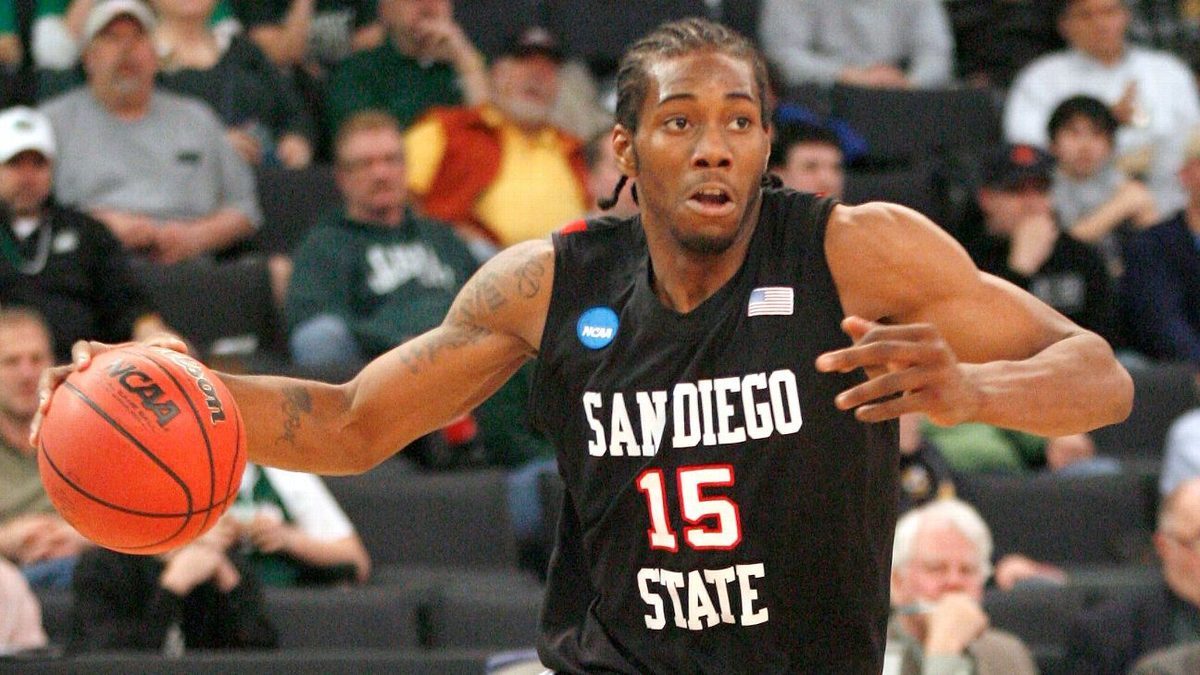
I’m here to cut through it. The second-best basketball player in this draft is a 19-year-old from San Diego State who barely speaks above a mumble, never changes his expression, and has hands the size of oven mitts. His name is Kawhi Leonard, and if your team passes on him to chase upside, you’re going to spend the next decade explaining why.
Let me tell you why I’m so sure.
The part everybody undersells
Here’s the knock, and I’ve heard all of it: he played in the Mountain West, not the ACC. His jump shot is a work in progress. He doesn’t create his own offense the way the highlight crowd wants. He’s quiet to the point that scouts can’t get a read on him. All true, more or less. And all of it is exactly the kind of thing that talks people out of the best bet on the board.
Because what gets lost in that list is what the kid actually did. Not what he might do. What he already did, against real competition, while carrying a program on his back.
A two-year wrecking crew at San Diego State
Leonard showed up in San Diego as a freshman in 2009-10 and immediately led the Aztecs in both scoring and rebounding — 12.7 points and 9.9 boards a night, plus 1.4 steals, while playing more than 31 minutes a game. He was named Mountain West Freshman of the Year, made first-team all-conference as an 18-year-old, and was MVP of the league tournament. San Diego State went 25-9 and made the NCAAs. In the round of 64 they ran into Tennessee and lost a 62-59 grinder — and Leonard, the freshman, posted 12 and 10 in the loss. That should have been the tell. Freshmen don’t usually rebound their weight in a tournament game.
Then came the sophomore season, and the sophomore season is the whole argument.
The 2010-11 Aztecs went 34-3. Read that again. Thirty-four wins, three losses, the best season in the history of the program, a top-six national ranking for most of the winter, and a Mountain West regular-season and tournament sweep. And the engine of all of it was Leonard, who averaged 15.5 points and 10.6 rebounds a game, led the entire conference in rebounding, and stacked up 23 double-doubles — fourth-most in the country. A 6-foot-7 wing finished the year ninth in the nation in rebounding. He added better than a steal and a half a night for good measure. The voters made him a second-team All-American. He was, by any honest accounting, one of the fifteen best players in college basketball, and he was doing it as a teenager in a league nobody east of the Rockies bothered to watch.
March is when the quiet kid got loud
You want to know who a player is, watch him in March. San Diego State had never won past the first weekend — never been to a Sweet 16 in school history — and Leonard dragged them there.
The round-of-32 game against Temple is the one I keep going back to. Two overtimes, a defensive rock fight, the kind of game that breaks young teams in half. The Aztecs survived it, 71-64, and Leonard put up 16 points and 9 rebounds while everyone on the floor was running on fumes. First Sweet 16 in program history, and the quiet sophomore was the reason.
It ended in the regional semifinal against Connecticut — Kemba Walker, on his magic-carpet ride to the national title, beat them 74-67. No shame in that; UConn cut down the nets two weeks later. But put a pin in the fact that the kid I’m telling you about went toe-to-toe with the best player in the sport, deep in the tournament, and the game stayed within a possession most of the way.
The defense is the whole point
Now the numbers that don’t show up in a box score, the ones that make me bang the table.
Leonard is 6-7 with a 7-foot-3 wingspan. His hands measured the biggest of anyone at the draft combine — north of eleven inches across. That’s not a fun fact; that’s a defensive weapon. It’s why he rebounds like a power forward, why passing lanes close on him before guards realize he’s there, why he can guard the two, the three, and the four without it being a mismatch. You do not teach that. You either have the levers or you don’t, and he has all of them.
This is a kid who already plays the hard end of the floor at a pro level. The offense — the jumper, the handle, the shot creation — that’s the stuff that develops with reps and good coaching. I’d rather bet on the guy who already does the thing nobody wants to do and add offense later, than bet on the pretty scorer and pray the defense shows up. It almost never shows up. Effort like Leonard’s, motor like his, that’s the part that’s already cooked.
Where he ends up — and where he should
The mocks have him drifting toward the middle of the first round, somewhere around the back half of the lottery, behind names that will get more applause on draft night. I think that’s a mistake somebody is going to be very happy to profit from.
And there are a few teams perfectly built to profit. A franchise like Indiana, grinding to put a defensive identity around its young core, could plug him in tomorrow. A team like Houston, forever hunting a two-way wing to round out the roster, would be thrilled. Even a contender short a perimeter stopper — the kind of team that loses a playoff series because it has nobody to throw at the other guy’s best scorer — should be on the phone. A long, switchable, relentless wing who rebounds and defends three positions and never needs a play called for him is the single most useful thing a good team can add. Some lucky club is going to land that in the teens.
The call
I’ve been doing this long enough to know what a sure thing feels like, and I’ve also been burned enough to be careful about saying it out loud. So let me be careful and say it anyway: outside of Kyrie Irving, Kawhi Leonard is the best player in this draft, and it isn’t all that close.
He won’t sell you a single ticket with his personality, he won’t dunk on a poster in the lottery interviews, and he’ll answer every question in about four words. Then he’ll go quietly take a starting job, lock down your opponent’s best wing, grab eleven rebounds, and slowly — quarter by quarter, season by season — turn into the guy you build around.
Draft the hands. Draft the wingspan. Draft the motor. The rest is coming, and the team that figures that out before June 23 is going to look awfully smart for an awfully long time.